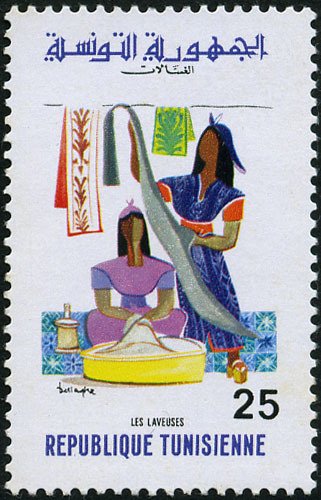
Scenes from Tunisian life - The washerwomen
The work of traditional washerwomen represented, before the advent of modernity, a major social and domestic function within the urban and rural communities of Tunisia. This activity, often carried out collectively around water points or public wash houses, constituted an essential space of solidarity and communication. Beyond the physical effort, these gatherings allowed the transmission of artisanal textile care techniques, while adding rhythm to neighborhood life. This organization of work underlines the preponderant place of the home in the balance of Tunisian society, where the management of water and cleanliness was elevated to the rank of pillar of domestic stability.
The integration of this theme into national philately demonstrates a desire to rehabilitate everyday gestures and modest professions as constitutive elements of the country's identity. By immortalizing the memory of the washerwomen, the Republic celebrates the hard work and perseverance that have supported the development of the nation throughout the ages. This homage to popular rituals allows us to preserve a precious intangible heritage, making the memory of these manual tasks a symbol of the transition to progress while remaining anchored in the values of sharing. This stamp acts as a mirror of the Tunisian soul, promoting the dignity of each profession in the construction of collective Mediterranean memory.
The integration of this theme into national philately demonstrates a desire to rehabilitate everyday gestures and modest professions as constitutive elements of the country's identity. By immortalizing the memory of the washerwomen, the Republic celebrates the hard work and perseverance that have supported the development of the nation throughout the ages. This homage to popular rituals allows us to preserve a precious intangible heritage, making the memory of these manual tasks a symbol of the transition to progress while remaining anchored in the values of sharing. This stamp acts as a mirror of the Tunisian soul, promoting the dignity of each profession in the construction of collective Mediterranean memory.